


How do Alumina ceramics simultaneously achieve rapid thermal conductivity and excellent electrical insulation?
Release Time : 2026-02-04
In high-temperature industries, electric heating equipment, and power electronics, materials often face a seemingly contradictory pair of needs: efficient heat conduction to prevent localized overheating, and complete current blocking to ensure safe insulation. Traditional metals have good thermal conductivity but poor electrical conductivity, while plastics offer excellent insulation but are not heat-resistant. Alumina ceramics, with their unique crystal structure and physicochemical properties, successfully bridge this gap, becoming an "all-rounder" in the field of high-temperature insulation and thermal management. Their core secret lies in the precise synergy between the material's intrinsic properties and microstructure.
1. Crystal Structure: The Physical Basis of Insulation and Thermal Conductivity
The main component of Alumina ceramics is α-Al₂O₃, with a hexagonal close-packed crystal structure. Oxygen ions form the framework, while aluminum ions fill the octahedral voids. This structure lacks free electrons or mobile ions; electrons are firmly bound in covalent-ionic bonds, resulting in extremely high resistivity. Even at 800°C, it maintains excellent electrical insulation properties, fully meeting the stringent requirements of high-voltage heating elements, spark plug insulators, and other demanding applications.
2. High Purity and Densification: Key Processes for Enhancing Overall Performance
The performance of aluminum ceramics is highly dependent on purity and density. Industrial-grade products typically use formulations with 95%–99.8% Al₂O₃ content. Higher purity means fewer grain boundary impurities, weaker phonon scattering, and superior thermal conductivity. Simultaneously, high purity also means fewer conductive impurity ions, further strengthening insulation reliability. Through isostatic pressing and high-temperature sintering processes, a dense green body with near-theoretical density can be obtained, eliminating porosity—a source of thermal resistance and potentially leading to partial discharge under high voltage. The dense structure ensures efficient heat transfer along the continuous crystal lattice while maintaining high breakdown strength.
3. Application Scenario Verification: The "Heat-Electric" Balance Master in Electric Heating Equipment
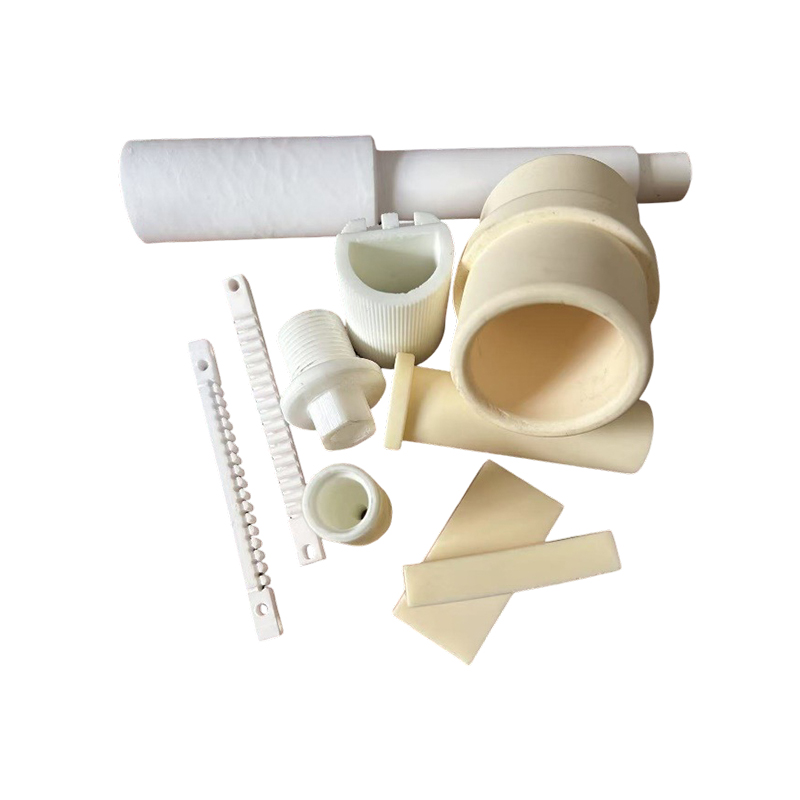
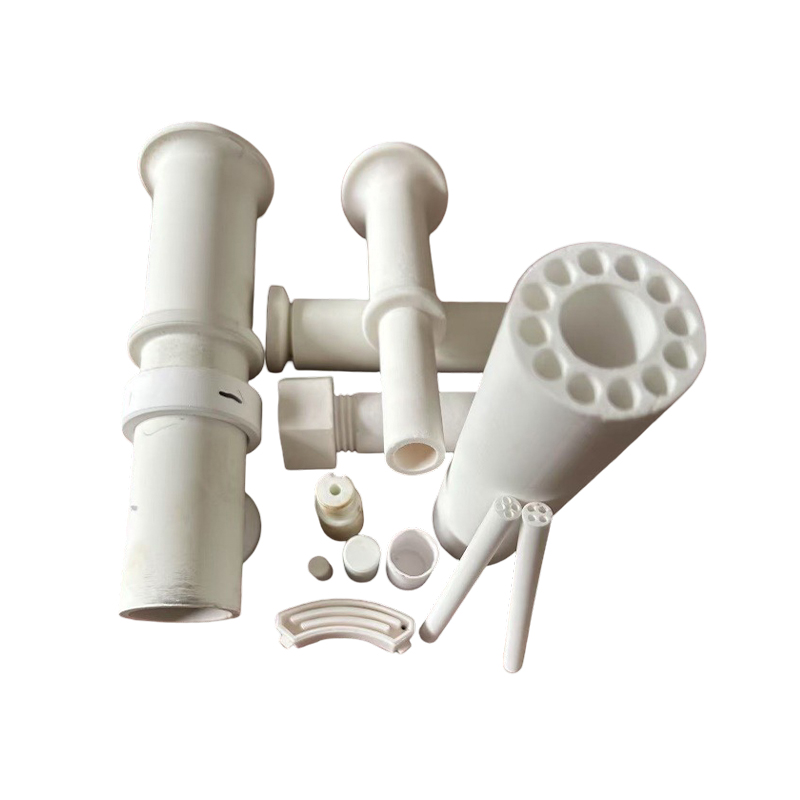
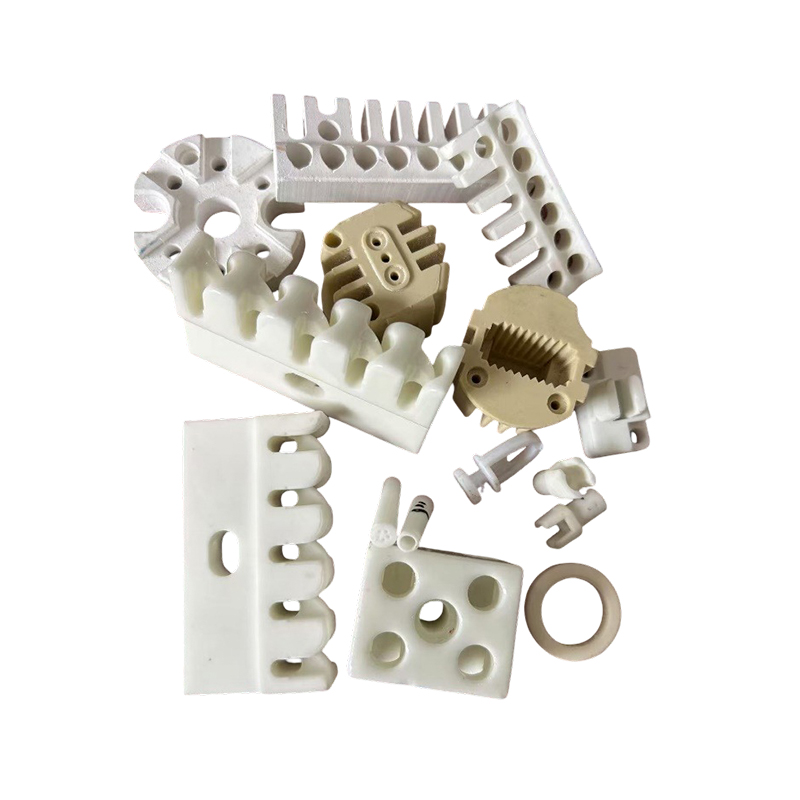
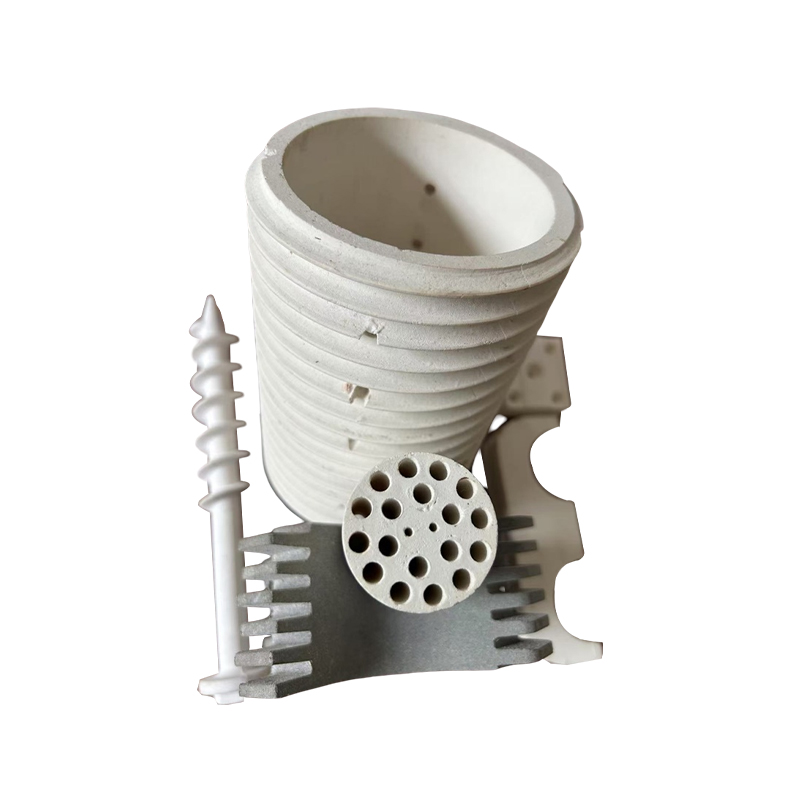
In industrial electric furnaces, tubular heaters, thermocouple protection tubes, and other equipment, aluminum ceramics are often made into insulating supports, sleeves, or substrates to directly wrap or support high-temperature heating wires. During operation, the heating wires generate a large amount of Joule heat. If this heat cannot be dissipated in time, it will lead to localized overheating and burnout. Alumina ceramics rapidly diffuse heat laterally, preventing hotspot concentration. Simultaneously, its high melting point, non-flammability, and chemical inertness allow it to operate stably for extended periods in oxidizing, reducing, or corrosive atmospheres without melting, deforming, or releasing harmful gases.
4. Comparative Advantages with Other Insulating Materials
Compared to mica, asbestos, or organic insulating materials, aluminum ceramics are non-aging, non-hygroscopic, and radiation-resistant. Compared to high thermal conductivity ceramics such as aluminum nitride or silicon carbide, it is lower in cost, has a mature manufacturing process, and higher mechanical strength. Although its thermal conductivity is not as high as AlN, its overall cost-effectiveness and reliability make it the mainstream choice in medium- and high-temperature applications.
Alumina The reason ceramics are irreplaceable in high-temperature industries lies in their "silent wisdom" as inorganic crystals, simultaneously harnessing the dual laws of heat and electricity. They do not rely on free electrons for heat conduction, but rather on lattice vibrations for highly efficient heat transfer; they contain no metallic components, yet are more resistant to extreme environments than many metals. In modern industrial systems that pursue high energy efficiency, high safety, and long lifespan, this material, which is both fast and stable, both hot and insulating, will continue to play a crucial role, silently safeguarding the safe operation of countless high-temperature devices.
1. Crystal Structure: The Physical Basis of Insulation and Thermal Conductivity
The main component of Alumina ceramics is α-Al₂O₃, with a hexagonal close-packed crystal structure. Oxygen ions form the framework, while aluminum ions fill the octahedral voids. This structure lacks free electrons or mobile ions; electrons are firmly bound in covalent-ionic bonds, resulting in extremely high resistivity. Even at 800°C, it maintains excellent electrical insulation properties, fully meeting the stringent requirements of high-voltage heating elements, spark plug insulators, and other demanding applications.
2. High Purity and Densification: Key Processes for Enhancing Overall Performance
The performance of aluminum ceramics is highly dependent on purity and density. Industrial-grade products typically use formulations with 95%–99.8% Al₂O₃ content. Higher purity means fewer grain boundary impurities, weaker phonon scattering, and superior thermal conductivity. Simultaneously, high purity also means fewer conductive impurity ions, further strengthening insulation reliability. Through isostatic pressing and high-temperature sintering processes, a dense green body with near-theoretical density can be obtained, eliminating porosity—a source of thermal resistance and potentially leading to partial discharge under high voltage. The dense structure ensures efficient heat transfer along the continuous crystal lattice while maintaining high breakdown strength.
3. Application Scenario Verification: The "Heat-Electric" Balance Master in Electric Heating Equipment
In industrial electric furnaces, tubular heaters, thermocouple protection tubes, and other equipment, aluminum ceramics are often made into insulating supports, sleeves, or substrates to directly wrap or support high-temperature heating wires. During operation, the heating wires generate a large amount of Joule heat. If this heat cannot be dissipated in time, it will lead to localized overheating and burnout. Alumina ceramics rapidly diffuse heat laterally, preventing hotspot concentration. Simultaneously, its high melting point, non-flammability, and chemical inertness allow it to operate stably for extended periods in oxidizing, reducing, or corrosive atmospheres without melting, deforming, or releasing harmful gases.
4. Comparative Advantages with Other Insulating Materials
Compared to mica, asbestos, or organic insulating materials, aluminum ceramics are non-aging, non-hygroscopic, and radiation-resistant. Compared to high thermal conductivity ceramics such as aluminum nitride or silicon carbide, it is lower in cost, has a mature manufacturing process, and higher mechanical strength. Although its thermal conductivity is not as high as AlN, its overall cost-effectiveness and reliability make it the mainstream choice in medium- and high-temperature applications.
Alumina The reason ceramics are irreplaceable in high-temperature industries lies in their "silent wisdom" as inorganic crystals, simultaneously harnessing the dual laws of heat and electricity. They do not rely on free electrons for heat conduction, but rather on lattice vibrations for highly efficient heat transfer; they contain no metallic components, yet are more resistant to extreme environments than many metals. In modern industrial systems that pursue high energy efficiency, high safety, and long lifespan, this material, which is both fast and stable, both hot and insulating, will continue to play a crucial role, silently safeguarding the safe operation of countless high-temperature devices.