


How do alumina ceramics demonstrate their superior corrosion resistance in the chemical industry?
Release Time : 2026-03-03
In modern chemical production systems, equipment is exposed to complex environments such as strong acids, strong alkalis, high temperatures, and high pressures for extended periods. The corrosion resistance of materials directly impacts production safety and equipment lifespan. Alumina ceramics, with their stable chemical structure and excellent physical properties, are widely used in the chemical industry. Whether in reactor linings, pipe liners, or pump and valve sealing components, alumina ceramics maintain stable operation under harsh environments, fully demonstrating their superior corrosion resistance.
1. Stable Chemical Composition Lays the Foundation for Corrosion Resistance
The main component of alumina ceramics is high-purity alumina. Its stable crystal structure and high chemical bond energy make it resistant to chemical reactions with most acids and alkalis. This structural characteristic allows it to maintain surface integrity even when exposed to common chemical media such as sulfuric acid, hydrochloric acid, and nitric acid, without dissolution or decomposition. Compared to metallic materials, alumina ceramics do not suffer from electrochemical corrosion, fundamentally avoiding oxidation, rust, and galvanic corrosion.
2. Dense Structure Reduces the Risk of Media Penetration
High-quality aluminum ceramics are sintered at high temperatures to form a high-density structure with low internal porosity and tightly bonded grains. This microstructure effectively prevents corrosive liquids or gases from penetrating the material, avoiding internal erosion. Even under prolonged immersion or continuous scouring, its surface remains smooth and clean, extending its service life.
3. Enhanced High-Temperature Resistance Enhances Environmental Adaptability
Chemical production often involves high-temperature reactions. Aluminum ceramics have a high melting point and good thermal stability, maintaining mechanical strength and chemical stability even in high-temperature environments. While many metals oxidize or soften at high temperatures, aluminum ceramics maintain structural stability, thus providing long-term protection in high-temperature corrosive media.
4. Synergistic Improvement of Lifespan through Wear Resistance and Pressure Resistance
In chemical pipeline transportation systems, the media often contains solid particles, causing erosion and wear on the inner walls of equipment. Aluminum ceramics have high hardness and strong wear resistance, resisting mechanical wear while reducing corrosion caused by surface damage. Furthermore, its high compressive strength makes it less prone to cracking under high pressure, further ensuring structural integrity.
5. Diverse Applications Enhance Comprehensive Protection
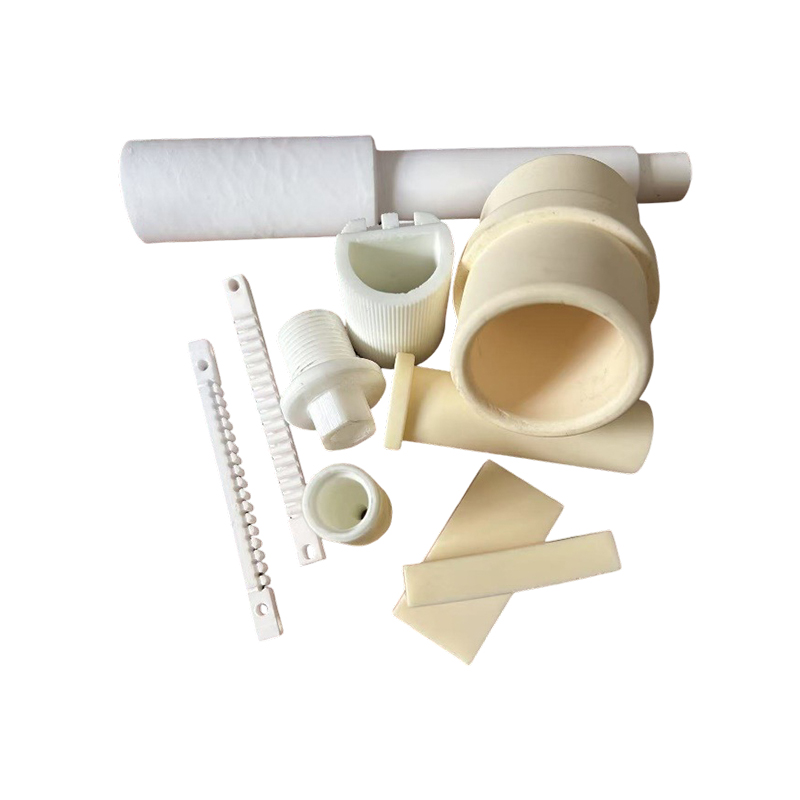
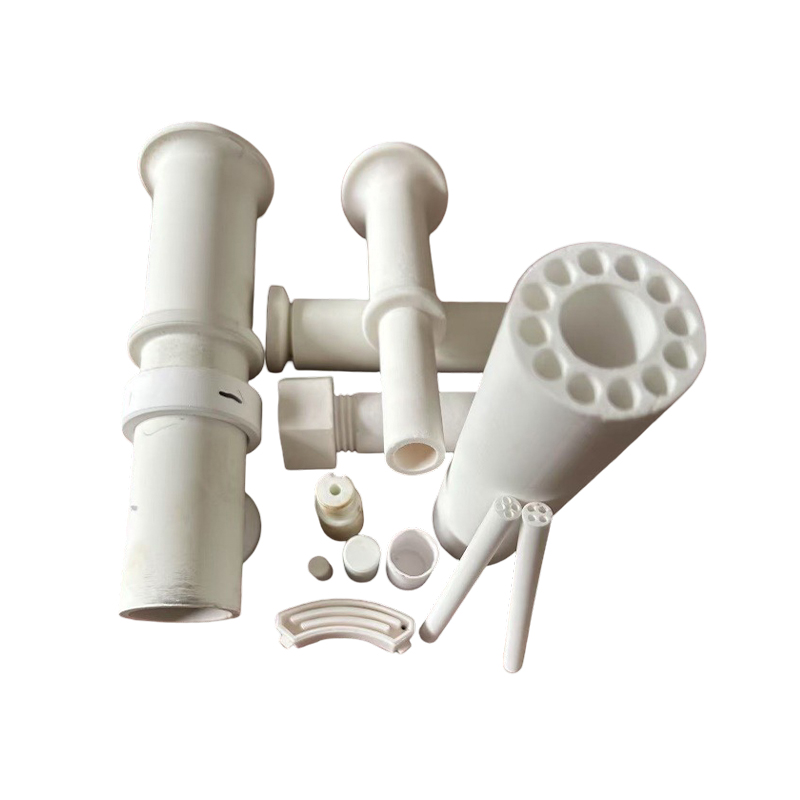
In practical applications, aluminum ceramics can be made into liners, tubes, or composite structural materials, combining with steel structures to form a corrosion-resistant lining system. This composite design retains the toughness of metallic materials while leveraging the corrosion resistance of ceramics, achieving a dual protective effect. With proper installation and maintenance, equipment repair frequency and downtime costs can be significantly reduced.
In summary, the excellent corrosion resistance of aluminum ceramics in the chemical industry stems from its stable chemical composition, dense microstructure, excellent high-temperature resistance and wear resistance, and diverse application forms. In complex and harsh chemical environments, it provides reliable protection for equipment safety and creates important conditions for enterprises to achieve long-term stable production.
1. Stable Chemical Composition Lays the Foundation for Corrosion Resistance
The main component of alumina ceramics is high-purity alumina. Its stable crystal structure and high chemical bond energy make it resistant to chemical reactions with most acids and alkalis. This structural characteristic allows it to maintain surface integrity even when exposed to common chemical media such as sulfuric acid, hydrochloric acid, and nitric acid, without dissolution or decomposition. Compared to metallic materials, alumina ceramics do not suffer from electrochemical corrosion, fundamentally avoiding oxidation, rust, and galvanic corrosion.
2. Dense Structure Reduces the Risk of Media Penetration
High-quality aluminum ceramics are sintered at high temperatures to form a high-density structure with low internal porosity and tightly bonded grains. This microstructure effectively prevents corrosive liquids or gases from penetrating the material, avoiding internal erosion. Even under prolonged immersion or continuous scouring, its surface remains smooth and clean, extending its service life.
3. Enhanced High-Temperature Resistance Enhances Environmental Adaptability
Chemical production often involves high-temperature reactions. Aluminum ceramics have a high melting point and good thermal stability, maintaining mechanical strength and chemical stability even in high-temperature environments. While many metals oxidize or soften at high temperatures, aluminum ceramics maintain structural stability, thus providing long-term protection in high-temperature corrosive media.
4. Synergistic Improvement of Lifespan through Wear Resistance and Pressure Resistance
In chemical pipeline transportation systems, the media often contains solid particles, causing erosion and wear on the inner walls of equipment. Aluminum ceramics have high hardness and strong wear resistance, resisting mechanical wear while reducing corrosion caused by surface damage. Furthermore, its high compressive strength makes it less prone to cracking under high pressure, further ensuring structural integrity.
5. Diverse Applications Enhance Comprehensive Protection
In practical applications, aluminum ceramics can be made into liners, tubes, or composite structural materials, combining with steel structures to form a corrosion-resistant lining system. This composite design retains the toughness of metallic materials while leveraging the corrosion resistance of ceramics, achieving a dual protective effect. With proper installation and maintenance, equipment repair frequency and downtime costs can be significantly reduced.
In summary, the excellent corrosion resistance of aluminum ceramics in the chemical industry stems from its stable chemical composition, dense microstructure, excellent high-temperature resistance and wear resistance, and diverse application forms. In complex and harsh chemical environments, it provides reliable protection for equipment safety and creates important conditions for enterprises to achieve long-term stable production.